
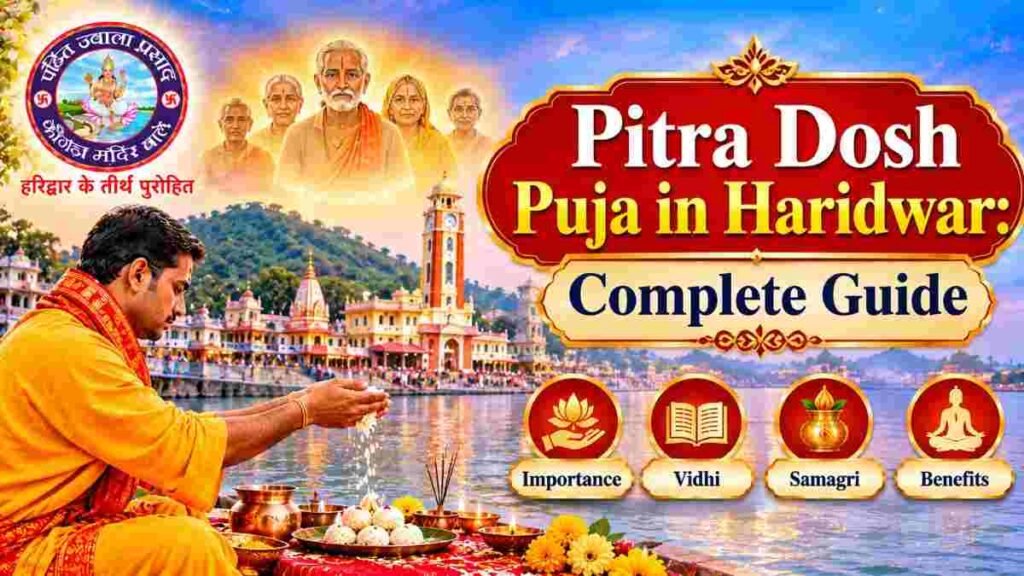
Pitra Dosh is a significant concept in Hindu astrology associated with ancestral blessings, family traditions and unresolved ancestral responsibilities. According to Hindu beliefs, performing rituals for departed ancestors helps families express gratitude and pray for their peace. Haridwar, situated on the sacred banks of the River Ganga, is considered an important pilgrimage destination for performing ancestral rituals. Many devotees visit this holy city to seek guidance from experienced priests and perform traditional ceremonies such as Pind Daan, Tarpan and Shraddh to honour their ancestors and fulfil religious duties.
Pitra Dosh Puja in Haridwar is a traditional Hindu ritual performed to seek peace for departed ancestors and reduce the difficulties believed to be associated with Pitra Dosh. The ceremony generally includes Sankalp, prayers, offerings, Tarpan and other Vedic rituals under the guidance of a qualified Pandit. Haridwar is considered an auspicious location because of its spiritual connection with the River Ganga. The rituals are performed according to family traditions, astrological guidance and the appropriate Hindu calendar dates.
1. Understanding the Religious Significance of Pitra Dosh
Pitra Dosh holds an important place in Hindu astrology and ancestral worship. It is traditionally associated with the belief that certain planetary combinations reflect unresolved ancestral duties or family-related karmic concerns. Devotees perform religious ceremonies to honour their ancestors and seek their blessings. These practices are based on Hindu religious traditions rather than scientifically established causes of personal difficulties.
- Meaning of Pitra Dosh
Pitra Dosh is believed to occur when certain planetary positions in a person’s birth chart indicate ancestral-related imbalances. Astrologers may examine the positions of the Sun, Rahu and other planets to understand these combinations. - Religious Importance of Ancestral Worship
Hindu traditions encourage remembering and respecting departed family members through prayers and offerings. These rituals express gratitude and are performed with the intention of seeking peace for ancestors. - Reasons for Performing the Puja
Families may consider these ceremonies when experiencing recurring concerns or when advised by an astrologer. The primary religious intention is to fulfil ancestral responsibilities and seek spiritual blessings.
2. Haridwar Is an Important Destination for Ancestral Rituals
Haridwar is among the most respected pilgrimage destinations in India for performing ancestral ceremonies. The sacred River Ganga holds special significance in Hindu traditions and is associated with purification and spiritual liberation. Devotees from different parts of the country visit this city to perform rituals for their departed family members. Pitra Dosh Puja in Haridwar is commonly performed at sacred locations under the guidance of knowledgeable priests.
- Har Ki Pauri
Har Ki Pauri is one of the most recognised ghats in Haridwar. Devotees visit this location for prayers, holy dips and certain ancestral rituals according to religious customs. - Narayan Shila Temple
Narayan Shila is an important religious location associated with Pitra-related rituals. Many families visit this sacred place to perform ceremonies for the peace of their departed ancestors. - Sacred River Ganga
The Ganga is considered highly auspicious in Hinduism. Offerings and Tarpan performed near the river are traditionally believed to help devotees fulfil their religious responsibilities towards their ancestors.
3. Important Rituals Performed During Pitra Dosh Puja
The ceremony generally consists of several traditional steps performed according to Vedic practices. The exact procedure may differ depending on family customs, the priest’s guidance and the purpose of the ritual. Pitra Dosh Puja in Haridwar may include the following religious activities.
- Sankalp
Sankalp is the initial declaration of religious intention. The devotee provides details such as their name, family lineage and the purpose of performing the ceremony. - Pind Daan
Pind Daan involves offering specially prepared rice balls, traditionally called Pindas, to departed ancestors. It is an important part of Hindu ancestral rituals. - Tarpan
Tarpan is performed by offering water and other prescribed items while remembering departed ancestors. This ritual symbolises respect and gratitude towards previous generations. - Mantra Chanting and Prayers
Priests recite traditional Vedic mantras and perform prayers during the ceremony. These prayers are intended to seek ancestral peace and divine blessings. - Brahmin Bhoj and Daan
Depending on family traditions, devotees may arrange food offerings for Brahmins and donate essential items. These practices are considered acts of religious charity.
4. Best Time to Perform Pitra Dosh Puja in Haridwar
The timing of ancestral rituals is considered important in Hindu traditions. Certain days and periods are traditionally regarded as especially suitable for performing ceremonies for departed family members. A priest can help determine an appropriate date based on the devotee’s requirements and religious calendar.
| Occasion | Religious Significance |
| Pitru Paksha | Dedicated period for remembering and honouring ancestors |
| Amavasya | Traditionally considered suitable for Tarpan and ancestral prayers |
| Sarva Pitru Amavasya | Important day for performing Shraddh for ancestors |
| Purnima | Considered auspicious for various religious observances |
| Death Anniversary | Annual remembrance and rituals for departed family members |
Pitru Paksha is particularly significant because Hindu traditions dedicate this period to ancestral remembrance and Shraddh ceremonies. However, devotees can consult a priest regarding suitable dates outside this period as well.
5. Cost and Arrangements for Pitra Dosh Puja
The overall expense depends on the type of ceremony, number of participating family members and the materials required. Pitra Dosh Puja in Haridwar does not have one universally fixed price because different rituals involve different arrangements. Devotees should discuss the complete requirements with their chosen Pandit before confirming the ceremony.
- Pandit Dakshina
The fee depends on the priest’s experience, the duration of the ceremony and the number of rituals included. It is advisable to confirm the amount beforehand. - Puja Samagri
Items may include flowers, fruits, rice, sesame seeds, ghee, incense sticks and other materials required for the prescribed rituals. - Additional Religious Services
Pind Daan, Tarpan, Brahmin Bhoj and other ceremonies may involve separate arrangements and expenses. - Travel and Accommodation
Visitors travelling from outside Haridwar should also consider transportation, accommodation and food expenses while planning their visit.
6. Preparation and Important Guidelines for Devotees
Proper preparation helps devotees participate in the ceremony peacefully and follow the prescribed religious customs. Before arranging Pitra Dosh Puja in Haridwar, families should discuss their requirements with a knowledgeable priest. Understanding the procedure and confirming the arrangements beforehand can make the experience more organised.
- Consult a Knowledgeable Pandit
Discuss the purpose of the ceremony and provide relevant birth chart details if an astrologer has recommended a particular ritual. - Carry Necessary Information
Keep basic family details and information about the departed ancestors available. The priest may require these details while performing Sankalp. - Follow Religious Instructions
Ask the Pandit about fasting, clothing and other preparations before the ceremony. Requirements can vary according to the ritual. - Confirm All Arrangements
Discuss the puja duration, location, samagri, dakshina and additional services before the scheduled date.
Conclusion
Performing ancestral rituals is an important part of Hindu religious traditions and provides families with an opportunity to remember and honour their departed loved ones. Haridwar holds special spiritual significance because of the sacred River Ganga and its recognised religious locations. With proper guidance from a knowledgeable Pandit and suitable preparation, devotees can perform the prescribed ceremonies while following their family traditions and religious beliefs.
Frequently Asked Questions (FAQs)
1. How to remove Pitra Dosh completely?
According to Hindu religious traditions, Pitra Dosh can be addressed through ancestral rituals such as Pind Daan, Tarpan, Shraddh and Pitra Dosh Nivaran Puja. Performing these ceremonies with proper Vedic procedures and following the guidance of an experienced Pandit is considered spiritually beneficial.
2. How much does Pitra Dosh Pooja cost?
The cost of Pitra Dosh Pooja depends on the type of rituals, puja samagri, Pandit’s dakshina and additional arrangements. For an accurate estimate, devotees should discuss their requirements with Pandit Ji before booking the puja.
3. Which pooja is done for Pitru Dosha?
The most commonly performed rituals for Pitru Dosha include Pitra Dosh Nivaran Puja, Pind Daan, Tripindi Shradh and Pitru Tarpan. These ceremonies are performed according to family traditions and astrological guidance. A knowledgeable Pandit can examine the situation and suggest the appropriate ritual for seeking peace and blessings from ancestors.
4. Which temple is famous for Pitru Dosha Pooja?
Narayan Shila Temple in Haridwar is an important religious destination for performing Pitra-related rituals. Other well-known pilgrimage destinations include Vishnupad Temple in Gaya and Trimbakeshwar Temple in Maharashtra. Devotees visit these sacred places to perform ancestral ceremonies such as Pind Daan and Shraddh.
5. Which mantra removes Pitra Dosh?
Devotees traditionally chant the following mantra to pray for ancestral peace and blessings:
ॐ पितृ देवताभ्यो नमः॥
(Om Pitru Devatabhyo Namah)
This mantra can be recited with devotion while remembering departed ancestors. The number of repetitions and the complete mantra practice may be determined according to family traditions and guidance from a knowledgeable Pandit. Mantra chanting is a spiritual practice and does not guarantee the complete removal of Pitra Dosh.