
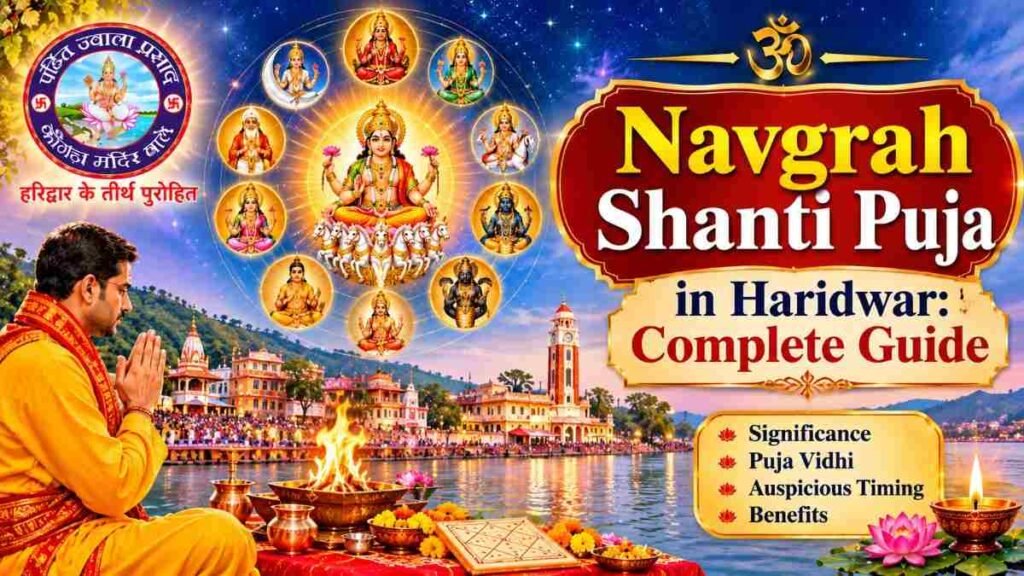
Navgrah Shanti Puja is a traditional Hindu ceremony performed to worship the nine planetary deities and seek their blessings for peace. Haridwar is an important pilgrimage destination where devotees visit the sacred River Ganga for religious ceremonies and prayers. Understanding the purpose, puja vidhi, samagri and arrangements can help families plan this spiritual ritual with devotion.
Navgrah Shanti Puja in Haridwar involves the worship of Surya, Chandra, Mangal, Budh, Brihaspati, Shukra, Shani, Rahu and Ketu. The ceremony generally includes Ganesh Puja, Sankalp, Kalash Sthapana, Navgraha Mantra Jaap, offerings and Havan. Devotees may arrange the ritual with a knowledgeable Vedic priest according to their horoscope, family traditions and spiritual intentions.
1. Religious Significance of Navgrah Shanti Puja
The Navgrahas hold an important place in Vedic astrology and Hindu religious traditions. Each graha represents a different planetary force and is traditionally associated with particular qualities and areas of life. Devotees perform this puja to pray for harmony, spiritual strength and balance.
- Surya (Sun): Surya is traditionally associated with confidence, leadership, energy and authority. Devotees worship the Sun for strength and positive direction.
- Chandra (Moon): Chandra represents the mind, emotions and mental peace in Vedic astrology. Worship is traditionally associated with emotional balance and calmness.
- Mangal (Mars): Mangal is associated with courage, determination and physical energy. Devotees pray for strength and the ability to face challenges.
- Budh (Mercury): Budh represents communication, intelligence and learning. Its worship is traditionally associated with wisdom and clarity.
- Brihaspati (Jupiter): Brihaspati is associated with knowledge, spirituality and guidance. Devotees seek blessings for wisdom and prosperity.
- Shukra (Venus): Shukra represents relationships, comfort, beauty and material happiness. Worship is traditionally associated with harmony and abundance.
- Shani (Saturn): Shani is associated with discipline, patience and responsibility. Devotees pray for strength and stability during challenging periods.
- Rahu and Ketu: These are considered shadow planets in Vedic astrology. Their worship is traditionally associated with clarity, spiritual growth and overcoming uncertainty.
2. Importance of Performing Navgrah Shanti Puja in Haridwar
Haridwar is one of the important pilgrimage destinations in Uttarakhand and is known for its spiritual connection with the River Ganga. Devotees visit the city to perform prayers, rituals and religious ceremonies with their families. Choosing Haridwar for this puja allows devotees to combine planetary worship with the spiritual atmosphere of a sacred pilgrimage.
- Sacred surroundings of the Ganga: Many devotees consider the River Ganga spiritually significant for prayers and religious observances. A visit to the river can be included as part of the pilgrimage according to local customs.
- Traditional Vedic rituals: Haridwar has a long-standing tradition of religious ceremonies performed by priests. Devotees can consult a knowledgeable Vedic priest for the appropriate puja procedure.
- Personal Sankalp: The priest may include the devotee’s name, gotra and intention in the Sankalp. This formally establishes the purpose of the ceremony.
- Family participation: Family members can participate in mantra recitation, offerings and prayers. This makes the ceremony a shared spiritual experience.
- Convenient pilgrimage planning: Devotees travelling from other cities can plan the puja along with temple visits and other religious activities in Haridwar.
3. Navgrah Shanti Puja Vidhi and Ritual Procedure
The traditional procedure begins with purification and a Sankalp before invoking the nine planetary deities. The priest performs the rituals using prescribed mantras and offerings according to the selected puja paddhati. Havan may also be included as part of an extended ceremony.
- Ganesh Puja: The ceremony generally begins with prayers to Lord Ganesha. Devotees seek blessings for the smooth completion of the religious rituals.
- Sankalp: The devotee takes a religious resolution with the help of the priest. The Sankalp may include the person’s name, gotra and purpose of the puja.
- Kalash Sthapana: A sacred Kalash is established as part of the worship. The priest performs the prescribed invocation according to the ritual tradition.
- Navgraha Sthapana: The nine planetary deities are invoked through a Navgraha Yantra, images or other prescribed arrangements. Flowers, Akshat and other offerings are presented.
- Mantra Jaap: The priest recites the mantras associated with the nine grahas. The number of repetitions depends on the selected ceremony and religious tradition.
- Navgraha Havan: A sacred fire ritual may be performed with ghee, herbs and other prescribed offerings. Mantras are recited while offerings are made into the fire.
- Purnahuti and Aarti: The havan is concluded with Purnahuti followed by prayers and Aarti. Prasad is distributed after the completion of the ceremony.
4. Navgrah Shanti Puja Samagri and Required Arrangements
The puja requires specific materials for worship, mantra recitation and Havan. The exact list depends on the ritual method followed by the priest and the number of participants. It is advisable to confirm the samagri list before the ceremony.
| Puja Samagri | Traditional purpose |
| Navgraha Yantra or images | Worship of the nine grahas |
| Kalash | Sacred ritual installation |
| Flowers and garlands | Offerings during puja |
| Roli, Chandan and Akshat | Traditional worship materials |
| Incense and diya | Lighting during prayers |
| Fruits and sweets | Bhog offerings |
| Ghee and Havan Samagri | Fire ritual |
| Navadhanya | Nine types of grains used in some traditions |
| Cotton wicks and camphor | Aarti and lighting |
| Dakshina | Traditional offering to the priest |
Before arranging Navgrah Shanti Puja in Haridwar, discuss the ritual duration, samagri, venue and any additional requirements with the priest.
5. Auspicious Timing and Suitable Occasions for the Puja
The timing of the ceremony is generally selected according to the Hindu Panchang and the devotee’s religious purpose. Some families consult an astrologer to identify a suitable date based on their birth chart and planetary periods. There is no single compulsory date followed by everyone.
- During challenging planetary periods: Some devotees arrange the ceremony during an unfavourable Mahadasha or Antardasha according to their horoscope.
- On auspicious weekdays: Certain families prefer a weekday associated with a particular graha. The final date is selected according to the Panchang and priest’s guidance.
- Before important occasions: Some devotees perform the puja before marriage, starting a new business or beginning an important phase of life.
- On birthdays or special occasions: Families may choose a birthday or another meaningful date for prayers and religious observances.
- According to the Panchang: The priest checks the tithi, nakshatra and other relevant Panchang details before confirming the ceremony.
6. Choosing a Priest and Planning the Puja in Haridwar
Selecting a knowledgeable priest is an important part of planning the ceremony. Devotees should understand the procedure, offerings and arrangements before confirming the date. A clear discussion helps avoid confusion on the day of the puja.
- Purpose: Explain whether the puja is being performed for general planetary peace or a specific horoscope-related concern. This helps the priest suggest an appropriate ritual.
- Confirm the Vedic procedure: Ask about the mantras, Havan and other rituals included in the ceremony. The procedure can differ according to the priest’s tradition.
- Verify the venue: Confirm whether the ceremony will take place at a temple, an authorised ghat area or a private puja venue. Follow local permissions and safety rules for rituals near the Ganga.
- Understand the arrangements: Discuss the puja samagri, priest’s dakshina, Havan arrangements and expected duration in advance.
- Share accurate birth details: If the puja is being planned based on a horoscope, provide the correct date, time and place of birth for the astrological consultation.
Conclusion
Navgrah Shanti Puja is a traditional Hindu ceremony dedicated to the worship of the nine planetary deities. Performing the ritual in Haridwar allows devotees to combine Vedic prayers with the spiritual atmosphere of this sacred pilgrimage destination. Understanding the puja vidhi, required samagri, auspicious timing and priest arrangements helps families plan the ceremony properly. Devotees can follow their family traditions and seek guidance from a knowledgeable priest for the appropriate ritual.
Frequently Asked Questions (FAQs)
1. How to perform Navgraha Puja?
Navgraha Puja is performed by a qualified pandit according to Vedic rituals. The ceremony generally begins with Ganesh Puja and Sankalp, followed by the installation of the nine planetary deities, mantra chanting, offerings and Havan. It concludes with Purnahuti and Aarti. The exact procedure may vary according to family traditions and astrological requirements.
2. How much does a Navgraha Shanti Puja cost?
The cost of Navgraha Shanti Puja depends on the number of pandits, puja duration, samagri and the rituals included. Available Haridwar listings show starting prices around ₹4,100–₹7,600, depending on the package and inclusions. Contact Pandit Jwala for the exact cost and details of the puja arrangements.
3. What are the items required for Navgraha Puja?
Navgraha Puja includes: Navgraha Yantra, Flowers, garlands, fresh leaves, Roli, kumkum, chandan, akshat, Incense sticks, camphor, earthen lamps, Ghee, cotton wicks, Gangajal, Fruits, sweets, betel leaves and nuts, Havan kund, wood and Samagri, Navadhanya (nine types of grains), Kalash, sacred thread and other offerings.
4. What are the five steps of Puja?
The five basic steps of a traditional puja are:
- Sankalp: Taking a sacred resolution and stating the purpose of the puja.
- Avahan: Inviting the deities through prayers and mantras.
- Puja and Offerings: Offering flowers, water, fruits, incense and other samagri.
- Mantra Jaap and Havan: Chanting the prescribed mantras and performing the sacred fire ritual, when included.
- Aarti and Prasad: Concluding the puja with Aarti, prayers and distribution of Prasad.
The steps may differ depending on the type of puja and Vedic tradition.