
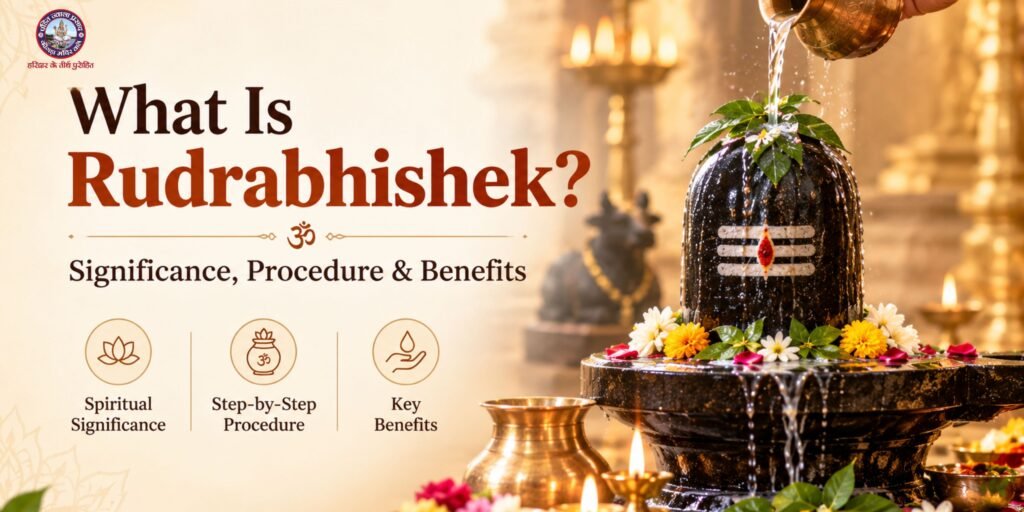
Rudrabhishek is a revered Hindu worship ritual dedicated to Lord Shiva. It is traditionally performed by offering sacred substances such as water, milk, curd, honey, and Ganga jal over a Shiva Lingam while chanting Vedic mantras. The ritual holds special importance during Sawan, Maha Shivratri, Pradosh, and other auspicious occasions. Families and devotees perform Rudrabhishek as an expression of devotion, gratitude, and spiritual discipline. Understanding its traditional significance and the proper method of worship helps devotees approach this sacred ceremony with faith and respect.
What Is Rudrabhishek? It is a sacred abhishek ceremony in which devotees bathe the Shiva Lingam with consecrated offerings while reciting Shiva mantras. The ritual symbolizes purification, surrender, and devotion to Lord Shiva. It is traditionally associated with prayers for peace, spiritual growth, family well-being, and the removal of obstacles. The ceremony can be performed at home or in a temple according to the devotee’s faith and the guidance of a qualified priest.
The Meaning and Spiritual Significance of Rudrabhishek
Rudrabhishek is a form of Shiva worship that combines ritual offerings with the chanting of sacred mantras. The word Rudra refers to Lord Shiva in his powerful and compassionate form while abhishek means a ceremonial bathing or anointing. The practice expresses reverence for Shiva and reminds devotees of the importance of inner purity and surrender.
- The Shiva Lingam Represents Lord Shiva The Shiva Lingam is worshipped as a sacred representation of Lord Shiva. Offering water and other substances symbolizes devotion and the recognition of divine presence.
- The Rudra Mantras Carry Sacred Meaning The Sri Rudram and other Shiva mantras are traditionally recited during the ceremony. Their chanting is believed to support concentration, devotion, and spiritual reflection.
- The Ritual Symbolizes Purification The bathing of the Shiva Lingam represents the purification of the mind and heart. Devotees use the ceremony as an opportunity to release negativity and cultivate positive intentions.
The Traditional Offerings Carry Symbolic Importance
The substances used during Rudrabhishek vary according to regional traditions and the type of puja. Each offering has a symbolic meaning within Hindu worship. Water is the most fundamental offering while milk, curd, honey, ghee, and sugar are often included in a Panchamrit abhishek.
| Offering | Traditional Significance |
| Water or Ganga jal | Purity and devotion |
| Milk | Nourishment and compassion |
| Curd | Prosperity and well-being |
| Honey | Sweetness and harmony |
| Ghee | Sacredness and illumination |
| Sugar | Happiness and goodwill |
| Bilva leaves | Reverence for Lord Shiva |
- Water and Ganga Jal Water represents purity and surrender. Ganga jal is especially revered because of its association with the sacred river Ganga and its place in Hindu traditions.
- Panchamrit is a mixture traditionally made from milk, curd, ghee, honey, and sugar. It is offered as a sacred preparation during many Hindu ceremonies.
- Bilva Leaves and Flowers Bilva leaves hold a special place in Shiva worship. Fresh flowers and leaves are offered as expressions of reverence.
The Rudrabhishek Procedure Follows a Sacred Sequence
The traditional ceremony begins with preparation and a prayerful intention. The priest or devotee then performs the abhishek while chanting mantras and offering sacred substances. The exact sequence may differ between temples and families but the central purpose remains devoted worship of Lord Shiva.
- Purification and Sankalp The worshipper cleans the puja space and prepares the offerings. A sankalp is made to express the purpose of the ceremony and the devotee’s intention.
- Invocation of Lord Shiva The Shiva Lingam is respectfully established or worshipped in the designated puja area. The ceremony begins with prayers and invocations according to tradition.
- Abhishek with Sacred Offerings Water and other offerings are poured over the Shiva Lingam while mantras are recited. Devotees maintain a calm and respectful attitude throughout the ritual.
- Bilva Patra and Flower Offering Fresh bilva leaves and flowers are offered to Lord Shiva. The devotee may also offer sandalwood paste, incense, and a diya.
- Aarti and Prasad The ceremony concludes with aarti and prayers. Prasad is distributed after the worship according to the temple or family tradition.
The Benefits of Rudrabhishek Are Rooted in Devotion
Traditional Hindu belief associates Rudrabhishek with spiritual purification and the blessings of Lord Shiva. Devotees perform the ritual to cultivate peace, strengthen faith, and seek divine guidance during important phases of life. These benefits are understood as spiritual and devotional outcomes rather than guaranteed worldly results.
- Peace of Mind The quiet atmosphere of worship and repeated mantra chanting can encourage mindfulness. Devotees often use this time to calm their thoughts and focus on prayer.
- Spiritual Growth The ceremony encourages humility, gratitude, and surrender. Regular worship can become a meaningful part of a personal spiritual practice.
- Family Well-Being Families may perform the ritual with prayers for harmony, good health, and happiness. It provides an opportunity for family members to worship together.
- Strength and Positive Intentions Devotees seek courage and guidance from Lord Shiva during challenging circumstances. The ritual can help them reflect on their intentions and approach difficulties with faith.
The Ritual Can Be Performed at Home or in a Temple
Rudrabhishek is traditionally performed in temples and at home. A temple ceremony may involve a priest who recites detailed Vedic mantras while a home puja can be simpler and equally meaningful as an expression of devotion. The choice depends on the devotee’s preference, family customs, and access to a qualified priest.
- Temple Rudrabhishek A priest conducts the ceremony according to the temple’s established traditions. Devotees can participate in the offerings and prayers while following the guidance of the temple staff.
- Home Rudrabhishek Families can perform a simple abhishek with water, a Shiva Lingam, and sincere prayers. A clean puja space and respectful worship are central to the ceremony.
- Guidance from a Qualified Priest A priest can explain the appropriate mantras, offerings, and ritual sequence. This is particularly helpful for devotees who want to perform an elaborate Vedic ceremony.
Proper Preparation Makes the Ceremony Meaningful
A peaceful and respectful environment helps devotees focus on worship. The necessary offerings should be prepared in advance while the worshipper maintains cleanliness and a prayerful attitude. Rudrabhishek does not require an elaborate arrangement for every devotee because a simple ceremony can also express sincere devotion.
- Prepare the Puja Materials Arrange water, a Shiva Lingam, bilva leaves, flowers, incense, and other offerings according to the chosen tradition. If Panchamrit is used, prepare it with clean ingredients.
- Maintain Cleanliness Clean the puja area and wash the vessels before beginning. Personal cleanliness is also traditionally observed during worship.
- Follow Temple Instructions When performing abhishek in a temple, follow the rules regarding offerings and the method of worship. Some temples have specific guidelines for milk, flowers, and other substances.
- Keep the Intention Sincere Focus on prayer and devotion rather than the number of offerings. The ritual is an opportunity for spiritual reflection and gratitude.
Conclusion
Rudrabhishek is a sacred form of Lord Shiva worship that combines abhishek, mantra chanting, and heartfelt prayer. The ritual carries deep spiritual significance through its offerings and traditional practices. Whether performed at home or in a temple, it provides devotees with an opportunity to cultivate faith, peace, and devotion while seeking the blessings of Lord Shiva.
Frequently Asked Questions (FAQs)
1. What Is Rudrabhishek?
Rudrabhishek is a sacred Hindu ritual in which devotees bathe the Shiva Lingam with water and other offerings while chanting Shiva mantras. It is performed as an expression of devotion to Lord Shiva.
2. What is the main purpose of Rudrabhishek?
The main purpose is to worship Lord Shiva with devotion and seek spiritual purification and blessings. Many devotees also pray for peace, family well-being, and guidance.
3. Which day is best for Rudrabhishek?
Monday is traditionally considered auspicious for Shiva worship. Sawan, Maha Shivratri, and Pradosh are also important occasions for devotees.
4. What are the main offerings used in Rudrabhishek?
Water, milk, curd, honey, ghee, sugar, bilva leaves, and flowers are commonly used. The exact offerings depend on the regional tradition and the type of ceremony.
5. What should devotees do after Rudrabhishek?
Devotees may complete the aarti, offer prayers, and receive prasad according to their tradition. Maintaining gratitude and a respectful attitude is an important part of the worship.